
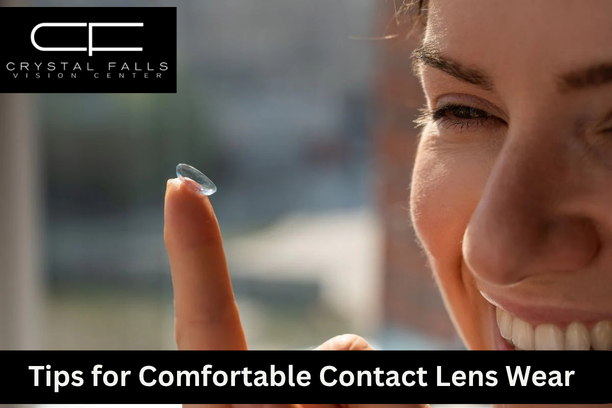
Contact lenses give millions of people the freedom to see clearly without wearing glasses all day. They are convenient for work, exercise, travel, and daily activities, but comfort depends on how well they fit into your eye care routine. Many contact lens users experience dryness, irritation, or discomfort simply because of improper handling, poor cleaning habits, or wearing lenses longer than recommended.
Healthy contact lens use starts with understanding your eyes and following professional guidance. Whether you are a new wearer or have used lenses for years, small changes in your routine can make a major difference in comfort and eye health. At Crystal Falls Vision Center, patients receive professional eye care support to help them find the right lenses and maintain clear, comfortable vision.
From choosing the correct lens type to practicing proper cleaning habits, there are several ways to make contact lens wear more comfortable. This guide covers essential tips that can help protect your eyes and improve your overall experience.
Choose the Right Contact Lenses for Your Eyes
Not all contact lenses are the same. Different people have different eye shapes, vision needs, and comfort preferences. A lens that feels comfortable for one person may not work well for another.
Get a Professional Contact Lens Evaluation
Before starting contact lenses, it is important to have a professional eye examination. An eye care provider will measure your eyes, check your vision, and recommend lenses that match your needs.
A proper fit helps ensure that the lenses stay in place, allow enough oxygen to reach the eyes, and reduce the chance of irritation. Wearing lenses that do not fit correctly can lead to discomfort, blurry vision, redness, and other problems.
Regular [Contact Lens Exams] help monitor your eye health and make sure your lenses continue to provide safe and comfortable vision.
Consider Your Lifestyle When Selecting Lenses
Your daily routine plays an important role in choosing contact lenses. Someone who spends many hours working on a computer may need lenses designed to reduce dryness. A person who plays sports may prefer lenses that provide stable vision during movement.
Some common contact lens options include:
Daily disposable lenses that are replaced after each use.
Monthly or biweekly lenses that require regular cleaning and storage.
Specialty lenses designed for conditions such as astigmatism or age-related vision changes.
Your eye care provider at Crystal Falls Vision Center can help you determine which option fits your lifestyle and eye health needs.
Practice Proper Contact Lens Hygiene
Good hygiene is one of the most important parts of comfortable contact lens wear. Your hands, storage case, and cleaning routine all affect your eye health.
Always Wash Your Hands Before Handling Lenses
Before putting in or removing contact lenses, wash your hands with soap and water. Dry them completely with a clean towel before touching your lenses.
Hands can carry bacteria, oils, and dirt that may transfer to your lenses. Even small amounts of contamination can increase the risk of eye irritation or infection.
Avoid using lotions, creams, or scented products on your hands before handling lenses because these substances can transfer to the lens surface and cause discomfort.
Follow Cleaning and Storage Instructions
If you wear reusable contact lenses, clean and store them exactly as recommended by your eye care professional. Always use fresh contact lens solution and avoid topping off old solution in your case.
Never clean lenses with tap water. Water can contain microorganisms that may cause serious eye infections. Contact lenses should only be cleaned with approved lens solutions.
Your contact lens case should also be replaced regularly. A dirty case can become a place where bacteria grow and may affect your lenses.
Prevent Dryness and Eye Discomfort
Dry eyes are one of the most common complaints among contact lens wearers. Many factors can contribute to dryness, including screen use, air conditioning, weather conditions, and spending long hours wearing lenses.
Give Your Eyes Regular Breaks
Many people spend several hours each day looking at computers, phones, and other digital screens. When focusing on screens, people often blink less frequently, which can cause the eyes to become dry.
Follow the 20-20-20 rule to reduce eye strain. Every 20 minutes, look at something about 20 feet away for at least 20 seconds. This simple habit can help relax your eyes and encourage regular blinking.
Use Eye Drops When Recommended
If your eyes become dry while wearing contacts, your eye doctor may recommend lubricating eye drops that are safe for contact lens users.
Avoid using regular eye drops without checking whether they are compatible with contact lenses. Some products may not be designed for use while wearing lenses.
Keeping your body hydrated, using a humidifier in dry environments, and avoiding direct airflow from fans or air conditioners can also help reduce dryness.
Follow Healthy Wearing Habits
Even high-quality contact lenses can cause problems if they are not worn correctly. Developing healthy habits can help you enjoy clearer vision while protecting your eyes.
Do Not Wear Lenses Longer Than Recommended
Each type of contact lens has a recommended wearing schedule. Some lenses are designed for daily use, while others can be worn for longer periods with proper care.
Wearing lenses beyond their recommended time can reduce oxygen flow to your eyes and increase deposits on the lens surface. This may lead to discomfort, redness, or blurry vision.
Always follow your eye care provider’s instructions instead of extending lens use to save time or money.
Avoid Sleeping in Contact Lenses Unless Approved
Sleeping in contact lenses can increase the risk of eye irritation and infection. Most contact lenses are not designed to be worn overnight.
If you accidentally fall asleep while wearing contacts, remove them as soon as possible and monitor your eyes for any signs of discomfort. If you notice pain, redness, or vision changes, contact your eye care provider.
Keep Backup Glasses Available
Even if you prefer contact lenses, keeping a pair of glasses nearby is a smart habit. Your eyes sometimes need a break from lenses, especially during illness, allergies, or periods of irritation.
Glasses are also useful when traveling or in situations where cleaning your lenses may not be convenient.
Protect Your Eyes During Daily Activities
Contact lenses are designed to fit into your lifestyle, but certain situations require extra care.
Be Careful Around Water
Avoid swimming, showering, or using hot tubs while wearing contact lenses unless you are following specific safety instructions from your eye doctor.
Water can introduce harmful microorganisms to the lens surface. If you need vision correction while swimming, ask about protective eyewear options.
Protect Your Eyes From Environmental Factors
Dust, smoke, pollen, and strong winds can make contact lenses feel uncomfortable. During allergy seasons, some people may notice increased dryness or irritation.
Wearing sunglasses outdoors and limiting exposure to smoky or dusty environments can help keep your eyes more comfortable.
Manage Screen Time
Digital eye strain can affect contact lens comfort. Long periods of screen use may reduce blinking and increase dryness.
Adjusting your screen position, taking regular breaks, and maintaining proper lighting can support healthier eyes throughout the day.
Know When to Contact an Eye Care Professional
Most contact lens discomfort can be prevented with proper care, but certain symptoms should not be ignored. Your eyes should never feel painful while wearing contacts.
Contact your eye care provider if you experience:
Persistent redness or swelling.
Eye pain or sensitivity to light.
Sudden vision changes.
Unusual discharge.
A feeling that something is stuck in your eye.
These symptoms may indicate a problem that requires professional attention. Early treatment can help protect your vision and prevent complications.
At Crystal Falls Vision Center, regular eye care appointments help patients maintain healthy vision and address concerns before they become serious problems.
Conclusion
Comfortable contact lens wear comes from choosing the right lenses, maintaining proper hygiene, and following healthy eye care habits. Simple steps such as washing your hands, replacing lenses on schedule, managing dryness, and attending regular eye appointments can make a significant difference.
Your eyes deserve professional care and attention. If you are experiencing discomfort or considering contact lenses, Crystal Falls Vision Center can help you find safe solutions for clear and comfortable vision. Schedule an eye care appointment today to keep your eyes healthy and enjoy the benefits of contact lenses with confidence.
FAQs About Comfortable Contact Lens Wear
How long does it take to get used to contact lenses?
Many new contact lens users adjust within a few days to a few weeks. The adjustment period depends on the type of lenses and individual comfort levels.
Can I wear contact lenses every day?
Many people wear contact lenses daily without problems. However, the right wearing schedule depends on your eye health, lens type, and recommendations from your eye care provider.
Why do my contact lenses feel dry?
Dryness can happen because of reduced blinking, environmental conditions, dehydration, or wearing lenses for too long. Your eye doctor can recommend solutions to improve comfort.
Can I sleep while wearing contact lenses?
Most contact lenses should not be worn overnight unless specifically approved by your eye care professional. Sleeping in the wrong type of lenses can increase the risk of eye problems.
How often should I replace my contact lens case?
Contact lens cases should generally be replaced regularly, often every few months or as recommended by your eye care provider. A clean case helps reduce the risk of contamination.
Are daily disposable lenses more comfortable?
Many people find daily disposable lenses comfortable because they provide a fresh lens every day and reduce the buildup of deposits. However, the best choice depends on your specific eye needs.
Do contact lens wearers still need eye exams?
Yes. Regular eye exams are important even if your vision seems clear. Eye care professionals check for changes in eye health and make sure your lenses remain a good fit.