
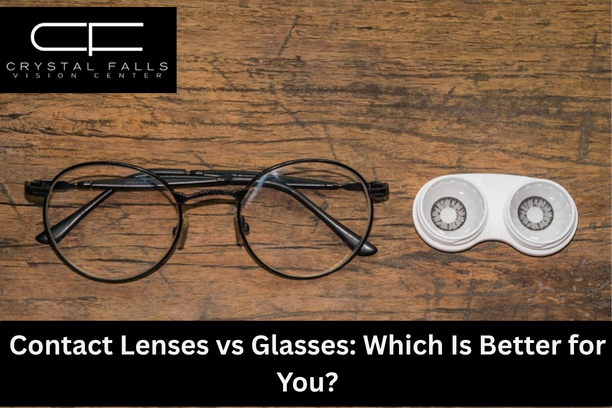
Choosing between contact lenses and glasses is a common decision for people who need vision correction. Both options can provide clear vision, but they offer different benefits, costs, comfort levels, and lifestyle advantages. The right choice depends on your prescription, daily activities, eye health, personal preferences, and how you want to manage your vision correction.
Some people prefer the convenience and simplicity of glasses, while others enjoy the freedom that contact lenses can provide during work, exercise, or social activities. There is also no rule that says you have to choose only one. Many people use glasses at home and contact lenses when they are working, playing sports, or attending special events.
If you are unsure which option is right for you, an eye care professional can evaluate your vision and discuss the choices available for your eyes. At Crystal Falls Vision Center, patients can receive professional eye care and guidance on vision correction options, including contact lenses. A proper eye examination and contact lens evaluation can help determine whether contacts, glasses, or a combination of both makes the most sense for your needs.
Understanding the Difference Between Glasses and Contact Lenses
Glasses and contact lenses correct vision in different ways, although both are designed to help you see clearly. Glasses sit in front of your eyes and use prescription lenses to bend light correctly before it enters your eyes. Contact lenses sit directly on the surface of the eye and move naturally with your eyes.
Because contact lenses move with your eyes, they can provide a wider field of vision than traditional glasses. They can also reduce issues such as reflections, fogging, and glare from the edges of frames. Glasses, on the other hand, are easy to put on and remove and generally require less direct contact with the eyes.
Your prescription may also influence which option is appropriate. People with certain prescriptions, astigmatism, dry eyes, or irregular corneas may need specific types of contact lenses or specialty lenses. An eye doctor can determine which options are suitable based on your eye health and vision needs.
How Glasses Work
Prescription glasses contain lenses designed to correct problems such as nearsightedness, farsightedness, and astigmatism. The lenses change the way light enters the eye so that images can be focused properly.
Glasses are available in many different lens materials and designs. Some people may benefit from lenses with features designed to reduce glare, protect against ultraviolet light, or improve comfort during prolonged screen use.
One major advantage is simplicity. You put your glasses on when you need them and take them off when you do not. There is no need to touch your eyes or follow a contact lens cleaning routine.
How Contact Lenses Work
Contact lenses are small prescription lenses placed directly on the eye. Since they move with your eyes, they can provide a more natural visual experience for many wearers.
Different types of contacts are available, including daily disposable lenses, reusable lenses, toric lenses for astigmatism, multifocal lenses, and specialty lenses for certain eye conditions.
However, contact lenses require more responsibility. Proper cleaning, storage, replacement, and wearing habits are important for maintaining eye comfort and reducing the risk of eye infections.
Advantages of Choosing Glasses
For many people, glasses remain the easiest and most practical way to correct their vision. They are especially convenient for children, older adults, and anyone who does not want to deal with contact lens care.
Easy to Use
Glasses are straightforward. You simply put them on when you need vision correction. There is no cleaning solution, storage case, insertion routine, or replacement schedule for daily wear.
This simplicity can make glasses a good option for someone who wants a low-maintenance approach to vision correction.
No Direct Contact With the Eyes
Some people do not feel comfortable touching their eyes. Glasses allow you to correct your vision without placing anything directly on the eye.
This can also be beneficial for people who experience discomfort with contact lenses or have difficulty handling small lenses.
Fashion and Personal Style
Glasses are not only vision correction devices. They can also be part of your personal appearance. Different frame shapes, materials, and colors allow people to choose a style that fits their personality.
Some people even keep several pairs of glasses for different occasions.
Protection From the Environment
Glasses can provide a physical barrier between your eyes and certain environmental factors. Depending on the lens and frame design, they may help reduce exposure to wind, dust, and other irritants.
For people who frequently experience eye irritation, this can be an important consideration.
Advantages of Choosing Contact Lenses
Contact lenses can be an excellent option for people who want vision correction without wearing frames. They are particularly popular among active adults, athletes, and people who prefer a more natural appearance.
Wider Field of Vision
Because contact lenses sit directly on the eye, they move when your eyes move. This can provide a broad field of vision without the frame edges associated with glasses.
For some people, this is especially useful when driving, playing sports, or participating in activities that require awareness of what is happening around them.
Convenient for Active Lifestyles
Glasses can sometimes slide down during exercise or become uncomfortable during certain activities. Contact lenses stay on the eye when properly fitted, making them a convenient choice for many active people.
Athletes may also prefer contacts because they do not have to worry about frames slipping, breaking, or interfering with protective equipment.
No Fogging
Glasses can fog when you move between cold and warm environments. Contact lenses do not have this problem.
This can be especially convenient during colder months or when wearing a mask or other face covering.
Appearance
Contact lenses allow people to correct their vision without changing their appearance with frames. This does not mean glasses are unattractive, but some people simply prefer not to wear them.
Contact lenses can also be useful for special occasions when someone wants a glasses-free look.
Contact Lenses vs Glasses: Which Should You Choose?
There is no universal answer. The better choice depends on your vision needs and lifestyle.
If you want something simple, easy to maintain, and convenient for occasional use, glasses may be the better option. They are also a practical choice if you do not like touching your eyes or have difficulty managing contact lenses.
Contact lenses may be a better fit if you participate in sports, dislike wearing frames, want a wider field of vision, or prefer vision correction that is less noticeable.
Consider Your Daily Routine
Think about what you do during a typical day. If you spend most of your time at home or in an office, glasses may provide all the convenience you need.
If your routine includes frequent exercise, outdoor activities, sports, or travel, contact lenses may offer additional flexibility.
Many people find that having both options provides the greatest convenience. You can wear contacts when they are most useful and switch to glasses when your eyes need a break.
Consider Your Eye Health
Eye health should always be part of the decision. Contact lenses are medical devices that require proper fitting and responsible care.
People with certain eye conditions or persistent dry eye symptoms may not be comfortable wearing some types of contact lenses. However, different contact lens designs may be available depending on the individual situation.
A professional eye examination can help determine whether contact lenses are appropriate for you.
Consider Your Budget
The cost of vision correction varies depending on the type of glasses or contacts you choose.
Glasses usually involve an initial cost for the frame and prescription lenses. They may last for years when properly cared for, although prescriptions can change and lenses or frames may eventually need replacement.
Contact lenses involve recurring costs because they must be replaced according to the recommended schedule. Daily disposable lenses, for example, require a new pair every day, while other lenses may be replaced less frequently.
When comparing costs, remember to consider related expenses such as contact lens solution, cases, replacement lenses, and professional fittings.
What About People Who Need Bifocals or Multifocal Correction?
Age-related changes in vision can make choosing between glasses and contact lenses more complicated. Many adults eventually develop presbyopia, a common age-related condition that makes it harder to focus on nearby objects.
Progressive glasses can correct distance, intermediate, and near vision in one pair of lenses. Multifocal contact lenses can also provide correction at different distances.
However, multifocal contacts may require an adjustment period. Some people adapt quickly, while others prefer glasses for reading or detailed close-up work.
An eye care professional can discuss the available options and help determine which type of vision correction is appropriate for your prescription.
Tips for Safe and Comfortable Contact Lens Wear
If you choose contacts, proper care is essential. Always follow the wearing and replacement schedule recommended by your eye care professional.
Wash and dry your hands before handling contact lenses. Never use tap water to clean or store contact lenses, and avoid sleeping in lenses unless your eye care professional has specifically determined that your lenses are approved for overnight wear.
Replace your contact lens case regularly and use the recommended contact lens solution. If your eyes become painful, unusually red, sensitive to light, or your vision suddenly becomes blurry, remove your lenses and seek professional eye care promptly.
A professional fitting is also important. During Contact Lens Exams, an eye care professional can evaluate how the lenses fit your eyes and determine whether your vision correction is working properly.
Why a Professional Eye Exam Matters
Choosing between glasses and contact lenses should not be based solely on appearance or convenience. Your eye health, prescription, corneal shape, tear film, lifestyle, and overall vision should all be considered.
A comprehensive eye examination can identify vision problems and help your eye care provider determine the most appropriate correction. If you are interested in contacts, a contact lens evaluation can provide additional information about fit, comfort, and lens options.
Crystal Falls Vision Center provides eye care services for patients in Leander and surrounding communities. If you are considering switching from glasses to contacts, changing your current contact lenses, or simply want to determine which option is right for you, discussing your needs with an experienced eye care professional is a sensible first step.
Conclusion
Both glasses and contact lenses can provide excellent vision correction, but they offer different advantages. Glasses are simple, convenient, and easy to maintain, while contact lenses can provide a wider field of vision and greater freedom for sports, exercise, and other activities.
The best choice depends on your prescription, eye health, lifestyle, comfort, and personal preferences. You also do not have to choose one option permanently. Many people benefit from keeping both glasses and contact lenses available for different situations.
If you are considering contact lenses or are unsure whether glasses remain the best option for you, schedule an eye examination with Crystal Falls Vision Center. A professional evaluation can help you understand your vision correction choices and find an option that supports clear, comfortable vision.
Frequently Asked Questions
Are contact lenses better than glasses?
Neither option is automatically better. Glasses are simple and easy to maintain, while contact lenses can provide a wider field of vision and greater freedom during physical activities. The right choice depends on your eyes, prescription, lifestyle, and personal preferences.
Can I wear both glasses and contact lenses?
Yes. Many people use both. You may wear contact lenses during work or sports and use glasses at home or when you want to give your eyes a break from contacts.
Are contact lenses safe?
Contact lenses can be safe when properly fitted and used according to professional instructions. Good hygiene, proper cleaning, correct replacement schedules, and appropriate wearing habits are important.
How often should I have my eyes examined?
The appropriate schedule depends on your age, eye health, prescription, and risk factors. Your eye care professional can recommend how often you should have an examination.
Can I wear contacts if I have astigmatism?
Yes. Many people with astigmatism can wear contact lenses. Toric lenses and specialty contact lenses may be available for certain prescriptions.
Are glasses cheaper than contact lenses?
Glasses can have a higher upfront cost but may last for several years. Contact lenses generally involve recurring costs for replacement lenses and care products. The total cost depends on the type of glasses or contacts you choose.
What should I do if my contact lenses become uncomfortable?
Remove the lenses and assess your symptoms. If discomfort continues, or if you experience significant redness, pain, light sensitivity, or vision changes, contact an eye care professional promptly.