
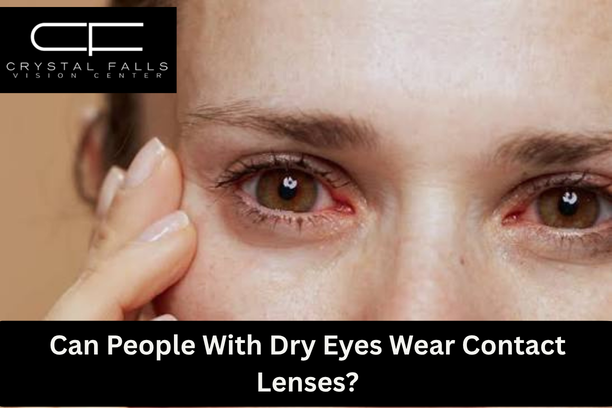
Dry eyes can make contact lens wear uncomfortable, but having dry eyes does not always mean you have to give up contacts. Many people with occasional or chronic dry eye symptoms can wear contact lenses successfully when they use the right type of lens, follow proper care habits, and work with an eye care professional to address the underlying cause.
Contact lenses sit directly on the surface of the eye, so they depend on a healthy tear film for comfort and clear vision. When the eyes do not produce enough tears or tears evaporate too quickly, lenses may feel dry, gritty, or irritating. Some people may notice redness, blurry vision, burning, or the feeling that something is stuck in their eye.
The good news is that there are several options for people who want to wear contacts while managing dry eye symptoms. At Crystal Falls Vision Center, patients can receive professional eye care and contact lens evaluations to determine whether contacts are appropriate and which options may provide better comfort. Understanding the connection between dry eyes and contact lenses is an important first step toward making an informed decision about your eye health.
Understanding Dry Eye and Contact Lenses
Dry eye occurs when your eyes do not have enough healthy tears to keep the surface of the eye properly lubricated. It can also occur when tears evaporate too quickly or do not contain the right balance of water, oils, and other components needed to protect the eye.
Contact lenses can sometimes make dry eye symptoms more noticeable because they interact with the tear film covering the eye. A contact lens needs adequate moisture to remain comfortable and maintain stable vision. If the tear film becomes unstable, the lens may feel uncomfortable or vision may become inconsistent.
Common Symptoms of Dry Eyes
People with dry eyes may experience several symptoms, including:
Burning or stinging
A gritty or sandy feeling
Redness
Excessive watering
Sensitivity to light
Blurry or fluctuating vision
Eye fatigue
Discomfort while wearing contact lenses
A feeling that something is in the eye
Not everyone experiences dry eye in the same way. Some people have mild symptoms that appear only after several hours of screen use, while others experience discomfort throughout the day.
Why Contact Lenses Can Make Symptoms Worse
A contact lens rests over the cornea, which is the clear front surface of the eye. Because the lens interacts with the tear film, changes in tear quality or quantity can affect how the lens feels.
People who already have dry eyes may notice that contacts become uncomfortable after several hours. Air conditioning, heating, wind, low humidity, prolonged computer use, and insufficient blinking can make the problem more noticeable.
This does not necessarily mean that contact lenses are off limits. Instead, it may mean that your eyes need better management or that a different lens option should be considered.
Can You Wear Contacts If You Have Dry Eyes?
In many cases, yes. People with dry eyes may be able to wear contact lenses, but the best choice depends on the severity and cause of their symptoms.
An eye doctor can evaluate your eyes, tear film, eyelids, and overall eye health before recommending contact lenses. A professional contact lens examination can also help determine whether the lenses fit correctly and whether your eyes remain adequately lubricated while wearing them.
For some patients, switching to a different lens material or wearing contacts for fewer hours each day may improve comfort. Others may need treatment for their dry eye symptoms before they can comfortably wear contacts.
The Importance of a Proper Contact Lens Fit
A contact lens should fit the eye properly. A lens that moves too much, fits too tightly, or does not interact well with the tear film can contribute to discomfort.
During a contact lens evaluation, an eye care professional considers factors such as the shape of your eye, prescription, tear production, corneal health, and lifestyle. This information helps determine which lens design may be appropriate.
Patients who have unusual corneal shapes or difficulty wearing standard lenses may also benefit from Hard-to-Fit Contacts. These specialty options can be considered when traditional lenses do not provide adequate vision, stability, or comfort.
What Types of Contact Lenses May Be Better for Dry Eyes?
There is no single contact lens that works best for every person with dry eyes. The right option depends on your eye health, prescription, tear film, lifestyle, and how long you need to wear your lenses each day.
Daily Disposable Contact Lenses
Daily disposable lenses are worn once and then thrown away. For some people with dry eye symptoms, this can be a convenient option because a fresh lens is used each day.
New lenses may have fewer accumulated deposits than lenses that are worn repeatedly. This may help some patients experience better comfort, although daily lenses are not automatically the right choice for everyone.
Silicone Hydrogel Lenses
Silicone hydrogel lenses allow a significant amount of oxygen to reach the cornea. They are widely used and available in different designs.
However, oxygen transmission alone does not determine whether a lens will be comfortable for someone with dry eyes. The lens material, surface properties, fit, wearing schedule, and the patient’s tear film all matter.
Specialty Contact Lenses
Some people need specialty lenses because of conditions such as keratoconus, astigmatism, irregular corneal surfaces, or other eye conditions. These lenses may require more detailed measurements and professional fitting.
If standard contact lenses repeatedly cause discomfort or fail to provide clear vision, an eye care professional can determine whether specialty lenses are worth considering.
How to Make Contact Lenses More Comfortable With Dry Eyes
If your eye doctor determines that contact lenses are appropriate, several everyday habits may help reduce discomfort.
Take Breaks From Screens
Long periods of computer, tablet, and phone use can contribute to dry eye symptoms. People tend to blink less frequently when concentrating on a screen, which can allow tears to evaporate more quickly.
Try following the 20-20-20 rule. Every 20 minutes, look at something about 20 feet away for at least 20 seconds. Taking regular breaks can give your eyes an opportunity to relax and blink normally.
Stay Hydrated
Drinking enough water supports normal body functions, including the systems involved in maintaining moisture throughout the body. While hydration alone does not treat every cause of dry eye, maintaining healthy fluid intake is a sensible part of overall eye care.
Avoid Sleeping in Contact Lenses
Unless a specific lens has been prescribed for overnight wear, you should remove your contacts before sleeping.
Sleeping in lenses can increase the risk of serious eye complications. If your eyes already tend to become dry or irritated, overnight wear may make discomfort more likely.
Follow Your Replacement Schedule
Do not continue wearing contact lenses beyond their recommended replacement schedule. Old lenses can accumulate deposits and may become less comfortable over time.
Your eye care professional can tell you how often your particular lenses should be replaced.
Keep Your Lenses Clean
If you use reusable contact lenses, follow the cleaning and storage instructions provided by your eye care professional and lens manufacturer.
Never use tap water or saliva to clean contact lenses. Also avoid reusing old contact lens solution unless the product specifically instructs you to do so.
Use Eye Drops Only When Appropriate
Artificial tears may help some people with contact lens-related dryness. However, not every eye drop is designed for use while wearing contact lenses.
Ask your eye care professional which lubricating drops are appropriate for your lenses. If you frequently need drops to remain comfortable, that may be a reason to have your eyes reevaluated.
When Should You Stop Wearing Contact Lenses?
Mild dryness after several hours of lens wear may be manageable, but persistent or worsening symptoms should not be ignored.
Remove your contact lenses and contact an eye care professional if you experience significant pain, pronounced redness, sudden changes in vision, unusual light sensitivity, discharge, or symptoms that do not improve after removing your lenses.
These symptoms can sometimes indicate an eye infection or another problem that requires prompt evaluation.
Do Not Ignore Persistent Discomfort
Contact lenses should not consistently hurt. Some people assume that discomfort is simply part of wearing contacts, but ongoing irritation may indicate that the lenses are not fitting properly or that an underlying eye condition needs attention.
A comprehensive eye examination can help determine what is causing the problem and whether you should continue wearing contacts.
How Crystal Falls Vision Center Can Help
Choosing contact lenses when you have dry eyes should begin with a professional evaluation rather than trial and error. Crystal Falls Vision Center provides eye care and contact lens services that can help patients determine whether contact lenses are suitable for their eyes.
A contact lens evaluation can assess your prescription, eye health, lens fit, and other factors that influence comfort. If standard contacts are not working well, your eye care professional can discuss other options, including specialty lenses when appropriate.
Crystal Falls Vision Center can also help patients address other vision concerns that may affect contact lens comfort. This is particularly important for people who experience recurring dryness, irritation, blurry vision, or difficulty wearing contacts for extended periods.
For patients in Leander and surrounding communities, working with a local eye care provider can make it easier to maintain regular eye examinations and address changes in vision or comfort as they occur.
Conclusion
Having dry eyes does not automatically mean you cannot wear contact lenses. Many people can continue wearing contacts when their dry eye symptoms are properly evaluated and managed and when they use lenses that are appropriate for their eyes.
The most important step is to avoid choosing contact lenses based solely on convenience or recommendations from friends. Your eyes, prescription, tear film, and lifestyle all play a role in determining which lenses may work best for you.
If contact lenses have become uncomfortable, do not assume that you simply have to live with the irritation. A professional contact lens evaluation can help identify the cause of the problem and determine whether a different lens, wearing schedule, or approach to eye care may improve your experience.
If you are experiencing dry eyes or having difficulty wearing contact lenses, contact Crystal Falls Vision Center for a professional eye and contact lens evaluation. Proper eye care can help you protect your vision while finding a contact lens option that fits comfortably into your daily life.
FAQs About Dry Eyes and Contact Lenses
Can I wear contact lenses if I have mild dry eyes?
Many people with mild dry eye symptoms can wear contacts. However, an eye examination can help determine whether your eyes are healthy enough for contact lens wear and which lens option may be appropriate.
Are daily contacts better for dry eyes?
Daily disposable contacts may be more comfortable for some people because a fresh pair is used each day. However, comfort varies from person to person, so your eye doctor should recommend lenses based on your individual needs.
Can contact lenses cause dry eyes?
Contact lenses can contribute to or worsen dry eye symptoms in some people. The effect may depend on the lens material, fit, wearing time, environment, and the condition of your natural tear film.
Should I remove my contacts when my eyes feel dry?
If your eyes become significantly uncomfortable, removing your contacts may help. If dryness happens frequently, schedule an eye examination rather than repeatedly tolerating the discomfort.
Can I use artificial tears while wearing contacts?
Some artificial tears are specifically formulated for use with contact lenses. Ask your eye care professional which products are safe for your particular lenses.
What if regular contacts do not fit comfortably?
If standard contact lenses are uncomfortable or do not provide stable vision, ask about specialty options. Patients with certain eye conditions may benefit from Hard-to-Fit Contacts or other specialty lens designs.
When should I see an eye doctor about contact lens discomfort?
See an eye care professional if discomfort is persistent, severe, or accompanied by redness, pain, discharge, light sensitivity, or vision changes. These symptoms should not be ignored.