
A child’s vision plays an important role in learning, movement, reading, and everyday development. Because young children may not realize that their vision is blurry or that one eye is working differently from the other, parents cannot always rely on a child to report a problem. An eye condition that goes unnoticed can affect how a child sees and uses visual information during important years of development.
So, when should a child have a first eye exam? The answer is earlier than many parents expect. Pediatricians typically screen children’s eyes during routine visits, but a comprehensive eye examination by an eye care professional provides a more detailed assessment. Knowing when these exams should happen can help parents identify problems early and understand what may be covered by their health or vision insurance.
When Should a Child Have Their First Eye Exam?
Children should have their vision checked from infancy, with additional exams as they grow. The American Academy of Ophthalmology recommends that newborns receive an initial eye health assessment and that infants receive further evaluation during routine pediatric visits. Children should also receive vision screening during the preschool years and throughout childhood.
For many children, a first comprehensive eye examination by an eye doctor is recommended around age 3, even if there are no obvious vision problems. Children entering school should also have their vision assessed. If a child has symptoms, developmental concerns, or a family history of certain eye conditions, an eye examination may be appropriate much earlier.
What Happens During an Infant Eye Check?
A newborn’s eyes are usually checked shortly after birth. The pediatrician or other medical professional may look for obvious abnormalities, unusual eye movements, or signs that the eyes are not developing normally.
During well-child visits, pediatricians also monitor visual development. These checks can identify concerns that may require a referral to a pediatric ophthalmologist or optometrist.
What About Children Between Ages 1 and 3?
Vision screening becomes increasingly important during the toddler years. Children may not cooperate with every test, but eye professionals have methods designed for young children.
Parents should not wait until a child can read an eye chart before arranging an examination. Many vision problems can be identified without asking a toddler to name letters.
Why Are Early Eye Exams Important?
Early eye exams can identify problems at a time when treatment may be particularly helpful. During childhood, the visual system is still developing, so untreated vision problems can sometimes interfere with normal visual development.
One condition doctors look for is amblyopia, commonly called lazy eye. It occurs when the brain and one eye do not work together normally. Another concern is strabismus, in which the eyes do not line up properly.
Children May Not Know Their Vision Is Abnormal
Adults often recognize when their vision changes because they remember what clear vision feels like. Young children may not have that comparison. If a child has always seen poorly through one eye, they may assume that what they experience is normal.
This is one reason routine screening matters. A child who performs well in school can still have an undetected vision problem.
Vision Can Affect School and Daily Activities
Clear vision helps children read books, recognize writing on a board, participate in sports, use computers, and judge distances. Problems with focusing, eye coordination, or depth perception may make some activities more difficult.
That does not mean every learning or behavioral problem is caused by poor eyesight. However, checking vision is a sensible part of evaluating a child’s overall health and development.
What Are the Signs a Child May Need an Eye Exam?
Parents should arrange an eye examination sooner if they notice changes in how a child uses their eyes. Some warning signs are easy to spot, while others may be subtle.
Common Warning Signs
Watch for behaviors such as:
- Frequently squinting or closing one eye
- Sitting unusually close to the television or holding books very close
- Tilting or turning the head to see
- Complaining of headaches after reading or schoolwork
- Rubbing the eyes frequently
- Having difficulty tracking moving objects
- Avoiding reading, drawing, or other visually demanding activities
- One eye turning inward or outward
- Frequent blinking
- Complaining that words or objects look blurry or doubled
A single behavior does not necessarily mean that a child has an eye condition. Persistent or repeated symptoms, however, deserve attention.
Family History Also Matters
Parents should tell the child’s doctor or eye care professional about significant family eye conditions. Some eye problems can occur more often in families.
Children who were born prematurely or who have certain developmental or medical conditions may also need closer monitoring. Their pediatrician can advise parents about an appropriate schedule.
What Happens During a Pediatric Eye Exam?
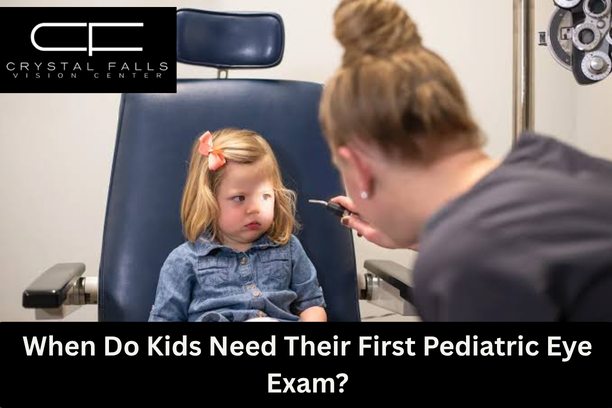
A pediatric eye exam is designed around the child’s age and ability to participate. The eye doctor may check visual sharpness, eye alignment, focusing ability, eye movement, depth perception, and overall eye health.
For younger children, testing may involve pictures, shapes, lights, or other methods rather than traditional letters. The doctor may also use special drops to temporarily widen the pupils when a closer examination is needed.
Does a Child Need to Know Their Letters?
No. Eye doctors can test young children who cannot read yet. Depending on the child’s age, the doctor may use pictures, symbols, matching activities, or other age-appropriate techniques.
Parents should not delay an exam simply because their child is too young to read an eye chart.
How Often Should Children Have Eye Exams?
The recommended schedule can vary based on age, risk factors, previous results, and the child’s eye health. Children with normal vision may follow routine screening and examination schedules recommended by their pediatrician and eye care professional.
Children who wear glasses or contact lenses, have an identified eye condition, or have other risk factors may need more frequent visits.
A useful approach is to think of eye care as an ongoing part of preventive care rather than a one-time appointment. Regular checks allow doctors to monitor changes as the child’s eyes develop.
Does Health Insurance Cover Children’s Eye Exams?
Coverage depends on the insurance plan. This is where parents should distinguish between medical insurance and vision insurance.
Some plans cover eye care when it is medically necessary, while routine vision exams may fall under a separate vision benefit. Coverage can also differ for glasses, contact lenses, specialist visits, and treatment for diagnosed eye conditions.
Before making an appointment, parents can check their plan documents or call the insurer to ask:
- Is a routine pediatric eye exam covered?
- Does my child have a separate vision benefit?
- Is a pediatric ophthalmologist covered in network?
- Is a referral required?
- Are glasses or other corrective lenses covered?
- What copayment, deductible, or coinsurance applies?
Understanding these details beforehand can help prevent unexpected medical bills.
How Can Parents Prepare for a Child’s First Eye Exam?
There is usually no complicated preparation required. Tell your child what to expect in simple terms and avoid making the appointment sound frightening.
Bring the child’s glasses if they already wear them, along with information about medications, previous eye examinations, and relevant family history. If the child has been complaining about blurry vision or headaches, write down when the symptoms occur.
It can also help to schedule the appointment when the child is normally rested and cooperative.
Pediatric Eye Care and Your Child’s Long-Term Health
Pediatric Eye Care is an important part of keeping track of a child’s overall development. Regular screening can help identify problems before they become more difficult to manage.
Parents should also remember that an eye exam is not only about whether a child needs glasses. Eye alignment, focusing, eye movement, and overall eye health are also important parts of the examination.
Conclusion
A child’s first eye exam should not wait until there is an obvious problem. Vision screening begins during infancy, and many children benefit from a more comprehensive eye examination during the preschool years.
Parents should arrange an earlier evaluation if they notice unusual eye movements, squinting, headaches, difficulty seeing, or other changes in visual behavior. Children with certain health conditions or family histories may also need closer monitoring.
For families reviewing health insurance, it is worth checking whether routine eye care, specialist visits, and corrective lenses are covered separately. A quick review of the policy before an appointment can make it easier to understand what the family may have to pay.
Frequently Asked Questions
At what age should a child have their first eye exam?
Children receive eye checks during infancy and routine pediatric visits. A comprehensive examination by an eye care professional is often recommended around age 3, or earlier when risk factors or symptoms are present.
Should a child have an eye exam before starting school?
Yes. Vision screening before or during the early school years can identify problems that may affect reading, classroom activities, or visual development.
Can a toddler have an eye exam?
Yes. Eye doctors use age-appropriate tests that do not require a toddler to read letters.
How do I know if my child has poor eyesight?
Squinting, frequent eye rubbing, sitting close to screens, headaches, difficulty tracking objects, or an eye that turns can be warning signs. Some children have no obvious symptoms, which is why routine screening is important.
Does insurance pay for pediatric eye exams?
It depends on the plan. Routine vision care may be covered through a vision benefit, while medically necessary eye care may be covered under health insurance. Check your specific policy before the appointment.
Does my child need an eye exam every year?
Not necessarily. The appropriate schedule depends on age, previous results, risk factors, and whether the child has an existing eye condition. Follow the schedule recommended by the child’s pediatrician or eye doctor.